The link between cannabis and inflammation is one of the most studied areas in cannabinoid science, and it helps explain why so many patients reach for cannabis for pain, arthritis, and recovery. Inflammation is the body’s natural defence response — useful in short bursts, but harmful when it becomes chronic. Cannabis appears to help by working through the body’s own endocannabinoid system, where specific cannabinoids and terpenes quiet the immune signals that drive swelling and pain. This guide explains the mechanisms in plain language, covers the key compounds, and frames it all within Thailand’s medical-cannabis system. It is educational information, not medical advice.
Table of Contents
- Cannabis and Inflammation at a Glance
- What Is Inflammation, and Why Does It Matter?
- How Cannabis and Inflammation Are Connected
- The CB2 Receptor: The Immune System’s Dimmer Switch
- Beta-Caryophyllene: The Anti-Inflammatory Terpene
- CBD, THC and Other Cannabinoids
- The Entourage Effect
- Cannabis and Inflammation Under Thailand’s Medical Framework
- Frequently Asked Questions
Cannabis and Inflammation at a Glance
Here is a quick reference to the main cannabis compounds studied for inflammation and how they are thought to work:
| Compound | Type | How it may calm inflammation |
|---|---|---|
| Beta-caryophyllene | Terpene | Directly activates the CB2 receptor; lowers inflammatory cytokines (TNF-α, IL-1β) |
| CBD (cannabidiol) | Cannabinoid | Modulates immune signalling; non-intoxicating; influences the ECS indirectly |
| THC | Cannabinoid | Binds CB1/CB2; pain relief and immune modulation (intoxicating) |
| CBG | Cannabinoid | Early research suggests anti-inflammatory potential |
| Myrcene, limonene, pinene | Terpenes | Support anti-inflammatory and analgesic effects in synergy |
These compounds rarely act alone — they work together, which is a recurring theme in the science below.
What Is Inflammation, and Why Does It Matter?
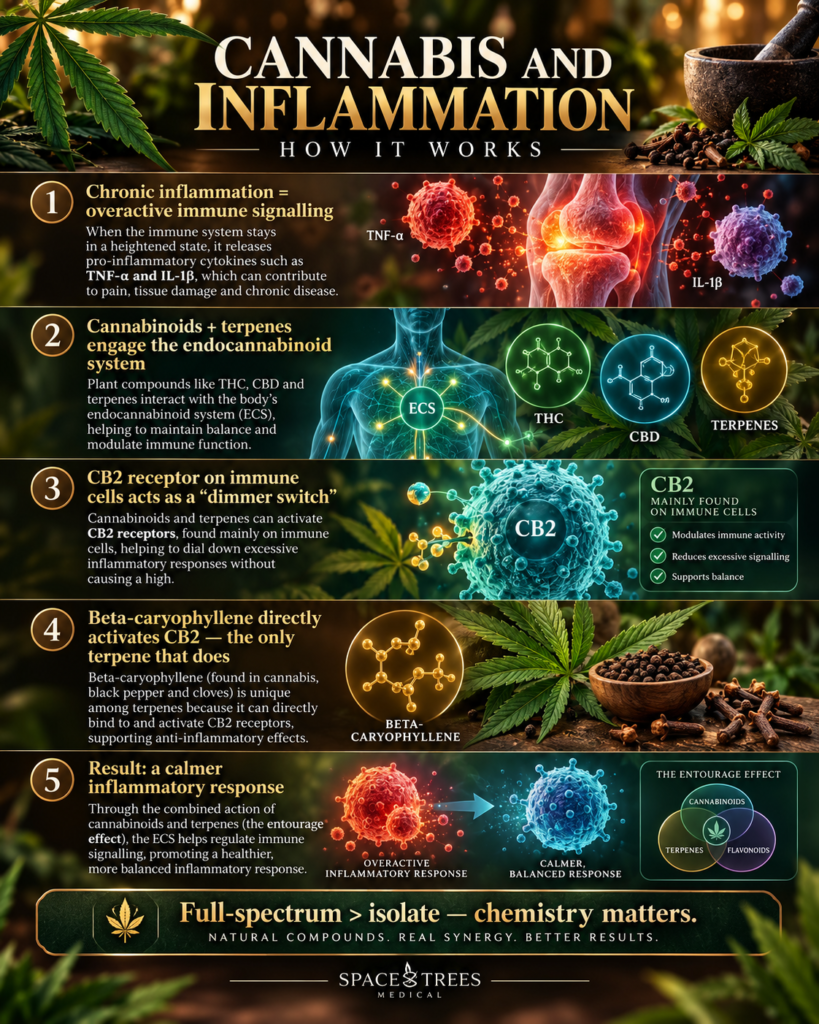
Inflammation is your immune system’s response to injury, infection, or irritation. When tissue is damaged, immune cells release signalling molecules called cytokines that increase blood flow, recruit defence cells, and produce the familiar heat, redness, swelling, and pain. In the short term, this is healing in action and entirely healthy.
The problem is chronic inflammation — when this response does not switch off and instead simmers for months or years. Persistent inflammation is linked to conditions ranging from arthritis and inflammatory bowel issues to chronic pain and autoimmune disorders. The goal of anti-inflammatory therapy is not to abolish inflammation, but to bring an overactive response back into balance. This is exactly where the endocannabinoid system, and the plant compounds that engage it, become interesting.
How Cannabis and Inflammation Are Connected
The connection between cannabis and inflammation runs through the endocannabinoid system (ECS) — a network of receptors, natural “endocannabinoid” molecules, and enzymes that helps regulate immune balance, pain, mood, and more throughout the body. The ECS acts like a thermostat, nudging systems back toward equilibrium when they drift too far in one direction.
Cannabis plant compounds (phytocannabinoids) and terpenes can engage this same system. Research has identified three major groups of molecules in cannabis — cannabinoids, terpenes, and flavonoids — that show anti-inflammatory properties. Rather than bluntly shutting the immune system down, they appear to modulate it: dialing down excessive inflammatory signalling while leaving the protective function intact. To understand the ECS in more depth, see our guide on the endocannabinoid system, and for a primer on the plant’s compounds, our cannabis terpenes guide.
The CB2 Receptor: The Immune System’s Dimmer Switch
The endocannabinoid system has two primary receptors: CB1, concentrated in the brain and nervous system, and CB2, concentrated in immune cells and tissues throughout the body. For inflammation, CB2 is the star of the show. Think of it as a dimmer switch on the immune response.
When CB2 receptors are activated, they tend to up-regulate anti-inflammatory pathways — reducing the release of pro-inflammatory cytokines and calming the activity of immune cells like T-cells and microglia. Because CB2 sits on the immune cells themselves, engaging it allows for anti-inflammatory effects without the intoxication associated with CB1 activity in the brain. This is why CB2-targeting compounds are such an active area of research: they offer a route to dampening harmful inflammation while avoiding a strong “high.”
Beta-Caryophyllene: The Anti-Inflammatory Terpene
If one compound captures the cannabis–inflammation story, it is beta-caryophyllene (BCP) — a peppery, spicy terpene also found in black pepper, cloves, and cinnamon. What makes BCP remarkable is that it is the only known terpene that directly binds and activates the CB2 receptor, functioning as a true dietary cannabinoid despite not being intoxicating. A landmark study published in the Proceedings of the National Academy of Sciences first established this selective CB2 activity.
Through that CB2 action, beta-caryophyllene has been shown to reduce key inflammatory cytokines such as TNF-α and IL-1β, producing anti-inflammatory, pain-relieving, and even anxiety-reducing effects in research models. In practical terms, a cannabis strain rich in caryophyllene may offer more anti-inflammatory potential than the THC number alone would suggest — a reminder that terpene content matters, not just cannabinoids. You can read the foundational CB2 research summarised on the U.S. National Library of Medicine (PMC).
CBD, THC and Other Cannabinoids
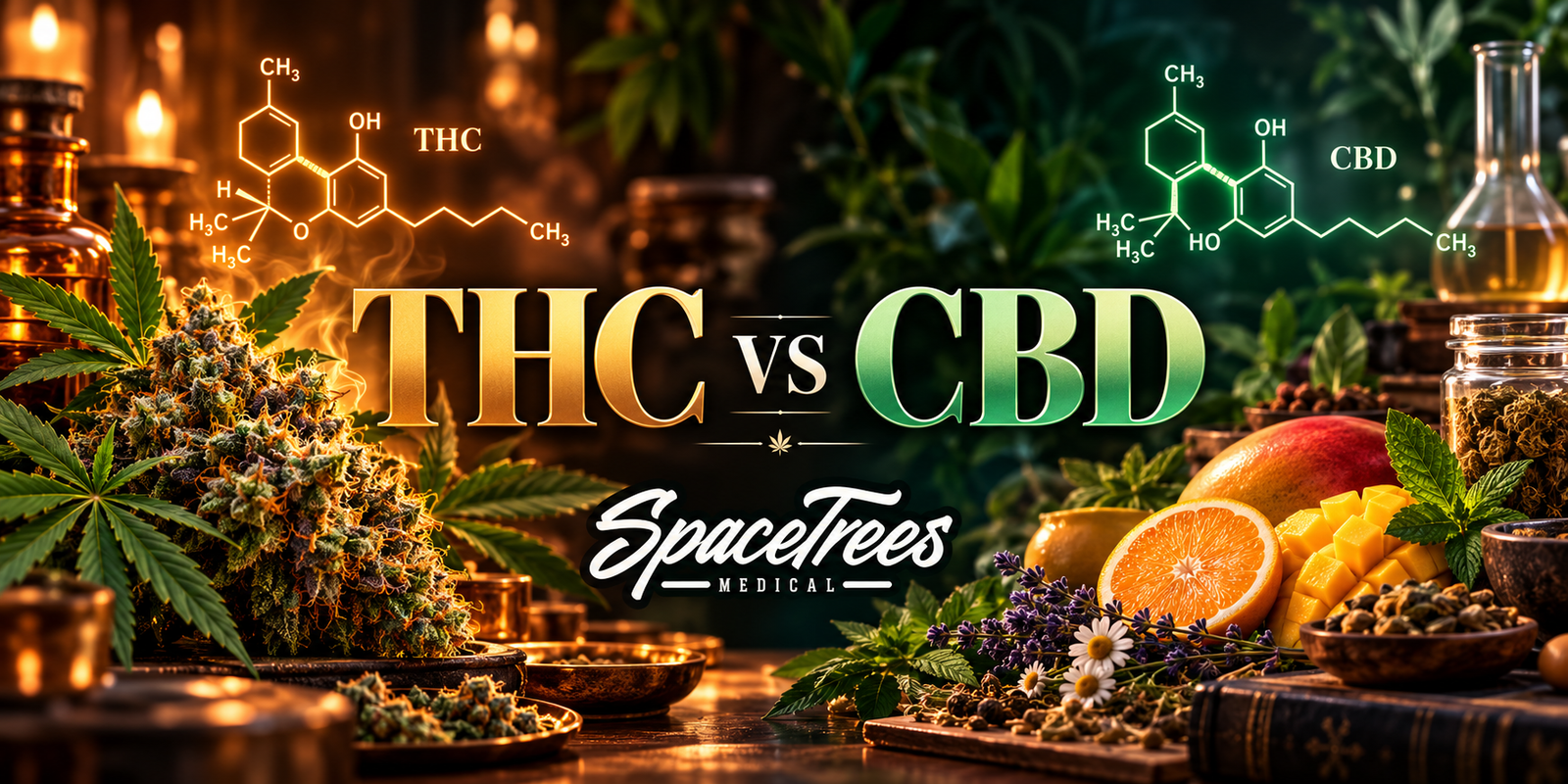
Beyond caryophyllene, several cannabinoids contribute to the anti-inflammatory picture. CBD (cannabidiol) is the most discussed: it is non-intoxicating and is thought to modulate immune signalling and influence the ECS indirectly, which is why it features heavily in products aimed at inflammation and recovery. THC also has anti-inflammatory and analgesic properties through its action on CB1 and CB2 receptors, though its intoxicating effect means dosing and medical supervision matter.
Lesser-known cannabinoids add to the effect. CBG (cannabigerol) shows anti-inflammatory promise in early research, and combinations appear to outperform single compounds: studies suggest pairing beta-caryophyllene with CBD or CBG can produce anti-inflammatory effects greater than either could alone. For a deeper comparison of the two most common cannabinoids, see our guide on THC vs CBD.
The Entourage Effect
The recurring lesson in cannabis and inflammation research is that the whole plant is greater than the sum of its parts — a phenomenon called the entourage effect. Cannabinoids, terpenes, and flavonoids interact, and their combined anti-inflammatory action can exceed what any isolated molecule delivers on its own.
This is why full-spectrum cannabis products — those that retain the natural blend of compounds — are often favoured for inflammatory conditions over isolates. A caryophyllene-rich, CBD-containing flower brings several anti-inflammatory mechanisms to bear at once: CB2 activation, cytokine reduction, and supportive terpene synergy. It also explains why two products with identical THC percentages can feel completely different. When choosing flower for inflammation, the full chemical profile — cannabinoids and terpenes together — is what to look at, and a knowledgeable dispensary can help you read it.
Cannabis and Inflammation Under Thailand’s Medical Framework
In Thailand, cannabis for inflammation, pain, or any condition sits firmly within the medical-only PT33 framework. To access cannabis legally, you need a PT33 (Por Thor 33) prescription from a certified practitioner, who assesses whether cannabis is clinically appropriate for your situation, and you purchase only from a licensed dispensary with on-site medical supervision.
This medical structure is actually well suited to inflammation management, because matching the right chemical profile to your needs benefits from professional guidance. An on-site consultation can help identify whether a caryophyllene-rich, balanced CBD:THC option fits your goals, and at what dose to start. Cannabis is not a cure for the underlying disease, and it should complement — not replace — care from your doctor. If you are exploring cannabis for an inflammatory condition under Thailand’s framework, our team can help you understand the options. View our live menu or get in touch to learn more.
Frequently Asked Questions
Does cannabis help with inflammation?
Research suggests cannabis compounds can help modulate inflammation. Cannabinoids and certain terpenes engage the endocannabinoid system — especially the CB2 receptor on immune cells — to reduce excessive inflammatory signalling. It is an area of active study, and cannabis should complement, not replace, medical care.
How does cannabis reduce inflammation in the body?
Mainly through the CB2 receptor, which is concentrated in immune cells. Activating CB2 up-regulates anti-inflammatory pathways and lowers pro-inflammatory cytokines such as TNF-α and IL-1β, calming an overactive immune response without necessarily causing intoxication.
What cannabis terpene is best for inflammation?
Beta-caryophyllene is the standout. It is the only terpene known to directly activate the CB2 receptor, and it has been shown to reduce inflammatory cytokines, giving it anti-inflammatory and pain-relieving potential without intoxication.
Is CBD or THC better for inflammation?
Both have anti-inflammatory properties. CBD is non-intoxicating and modulates immune signalling, while THC works through CB1/CB2 but is intoxicating. Research suggests combinations — full-spectrum products — often outperform either compound alone thanks to the entourage effect.
What is the entourage effect?
It is the synergy between cannabis cannabinoids, terpenes, and flavonoids, where the combined effect is greater than any single compound. For inflammation, full-spectrum products that preserve this natural blend are often preferred over isolates.
Can I use cannabis for inflammation legally in Thailand?
Only within the medical framework. You need a PT33 prescription from a certified practitioner and must buy from a licensed dispensary with on-site supervision. A consultation helps match the right chemical profile and dose to your needs.
Connect With Space Trees
Come see us in Nimman, Chiang Mai, or reach out online — our team is happy to help you choose the right flower for your needs under Thailand’s PT33 medical framework.